New Kitten Feeding Plan: Week 1 Meals & Portions
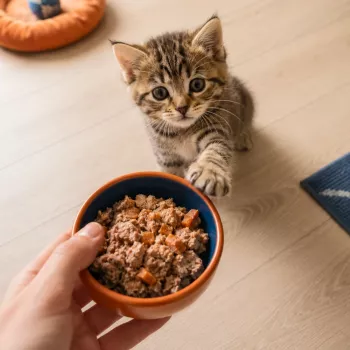
Feeding Your New Kitten Right: A First-Week Nutrition Plan for Healthy Growth
A new kitten’s first days at home set the tone for appetite, digestion, hydration, and steady growth. The goal during week one is simple: keep meals consistent, choose a complete kitten diet, and make any changes slowly so their tiny stomach can keep up.
What Makes Kitten Nutrition Different
Kittens aren’t just “small cats.” They burn more calories per pound, grow rapidly, and need specific nutrients to support brain development, bone growth, and nonstop play.
- Kittens need higher calories per pound than adult cats to fuel growth and high activity.
- Choose a food labeled “complete and balanced” for growth (or “all life stages”) with an AAFCO/FEDIAF adequacy statement. The AAHA label guide can help you verify this: How to Read a Pet Food Label.
- Prioritize highly digestible animal protein, fat for energy, DHA for brain/vision, calcium and phosphorus for bones/teeth, and taurine for heart/vision.
- Keep treats and toppers as a small add-on so the main diet stays nutritionally balanced.
What Food to Start a New Kitten On
The smoothest first week usually comes from minimizing change. If you know what the kitten was eating before adoption, start there and settle their digestion first.
- If the previous diet is known, feed the same food for 3–7 days, then transition slowly if you want to change brands or formulas.
- For very young kittens (often under about 8 weeks), confirm with a veterinarian whether kitten milk replacer, bottle-feeding, or a soft “gruel” is needed.
- Wet kitten food supports hydration and is often easier for small mouths; dry kitten food is convenient and can stay fresh between meals if portioned properly.
- A mixed routine (scheduled wet meals plus measured dry) works well for many homes, as long as total daily calories remain appropriate.
- Avoid cow’s milk. Many kittens are lactose-intolerant, and diarrhea can derail the first week fast. Fresh water should be the main fluid; a fountain can help some kittens drink more.
Quick starter guide for choosing a first kitten food
| Option | Best for | Watch-outs | Simple tip |
|---|---|---|---|
| Wet kitten food (pâté or minced) | Hydration support, picky eaters, small kittens | Spoils if left out too long | Offer 3–4 small meals and refrigerate leftovers promptly |
| Dry kitten food | Convenience, grazing households | Lower water intake if no wet food is offered | Measure daily amount and refresh the bowl to keep it appealing |
| Combination feeding | Balanced convenience + hydration | Easy to overfeed if not measured | Set a daily calorie target and split between wet and dry |
| Diet change (new brand/protein) | Needed for medical, preference, or availability reasons | Diarrhea/vomiting if switched too fast | Use a 7–10 day transition plan |
How Much to Feed: Portions Without Guesswork
In week one, accuracy matters more than perfection. Start with the package feeding guide for your kitten’s age and current weight, then fine-tune based on how they’re doing.
- Use the label’s starting portions, then adjust based on body condition, stool quality, and steady growth.
- Most kittens do best with multiple small meals: many younger kittens need 4 meals/day; many older kittens do well with 3 meals/day, trending toward 2 meals/day near adulthood.
- Aim for a gently rounded belly after meals (not tight or distended) and consistent, formed stools.
- Weigh your kitten weekly (a kitchen scale works). Consistent gain is expected; lack of gain, lethargy, or diarrhea lasting more than a day is a reason to call your vet.
If you’d like a structured schedule you can follow without second-guessing, Feeding Your New Kitten Right (Essential Kitten Nutrition eBook) lays out meal routines, portion checkpoints, and simple troubleshooting for the first months.
A Gentle 7–10 Day Food Transition Schedule
Switching foods too quickly is one of the fastest ways to trigger loose stools. If you’re changing brands, proteins, or formulas, ease in gradually.
For broader nutrition guidance and what to monitor as your kitten grows, Cornell’s overview is a helpful reference: Cornell Feline Health Center: Feeding Your Cat.
Mealtime Routines That Prevent Fussiness and Overeating
If you’re still learning what your kitten’s posture, tail, and “mealtime meows” are telling you, the Cat Body Language & Behavior Cheat Sheet can help you spot signs of stress, discomfort, or overstimulation that may affect appetite.
Common Feeding Mistakes to Avoid
For more on evaluating diet choices and overall nutrition strategy, WSAVA’s guidance is a solid, vet-focused resource: WSAVA Global Nutrition Guidelines.
When to Check With a Veterinarian
A Simple Plan for Confident Feeding From Day One
- Start with the current food, offer small frequent meals, and prioritize a complete and balanced kitten diet.
- Track weekly weight and stool quality to fine-tune portions.
- Transition slowly when changing foods, and keep treats minimal during the adjustment period.
- For a step-by-step roadmap you can follow day by day, use Feeding Your New Kitten Right (Essential Kitten Nutrition eBook) as a structured reference for the first months.
FAQ
Should a new kitten eat wet food, dry food, or both?
Any option can work as long as the food is complete and balanced for growth. Wet food supports hydration, dry food adds convenience, and combination feeding is common—just measure portions so total daily intake stays on track.
How often should a kitten eat each day?
Most young kittens do best with 3–4 small meals per day, while older kittens often do well with 2–3 meals as they mature. Adjust based on steady weight gain and your veterinarian’s guidance.
What’s the safest way to switch a kitten’s food?
Use a gradual 7–10 day transition, increasing the new food slowly and pausing if loose stools appear. Avoid changing multiple things at once, and contact your veterinarian if vomiting, diarrhea, or poor appetite persists.










Leave a comment