Calm Your Pet Around the Vacuum: A Gentle Training Plan
Helping Pets Handle Vacuum Stress
Vacuum cleaners combine loud noise, vibration, unpredictable movement, and unfamiliar scents—all common triggers for fear in cats and dogs. With a gradual plan and the right setup, many pets can shift from panic to calm tolerance (and sometimes curiosity) around vacuuming. The key is keeping your pet under their stress threshold so learning can happen, rather than forcing “endurance” through fear.
Why vacuums feel threatening to cats and dogs
To people, a vacuum is a chore. To many pets, it’s a fast-moving, noisy object that disrupts the home in ways that feel unsafe.
- Noise sensitivity: High decibel levels and sudden start-up can trigger a powerful startle response.
- Movement pattern: A vacuum advances directly toward a pet, changes direction abruptly, and can block exits.
- Vibration and airflow: Floor vibration and gusts of air can feel like an approaching “predator.”
- Scent and territory disruption: Stirring dust and moving furniture can make the home smell different, which may unsettle pets.
- Learning history: One frightening experience can create an association that repeats every time the vacuum appears.
Signs a pet is stressed (and when to pause training)
Training only works when your pet can still think, eat, and disengage. If you see escalating fear signals, the current step is too hard.
- Mild: Lip licking, yawning, whale eye, ears back, tail tucked, pacing, leaving the room.
- Moderate: Trembling, panting (when not hot), barking, growling, hiding, refusing treats.
- Severe: Lunging at the vacuum, attempting to bite, urinating/defecating, prolonged shutdown, frantic escape behavior.
- Rule of thumb: If your pet won’t take high-value treats or can’t disengage from the vacuum, pause and step back.
Safety note: For any bite risk, use barriers (baby gates, closed doors) and consult a qualified behavior professional. The International Association of Animal Behavior Consultants (IAABC) is a helpful place to start when looking for support.
Set up the environment for success before vacuuming
Management makes training easier. Before you ever turn the vacuum on, build a predictable routine that protects your pet’s sense of control.
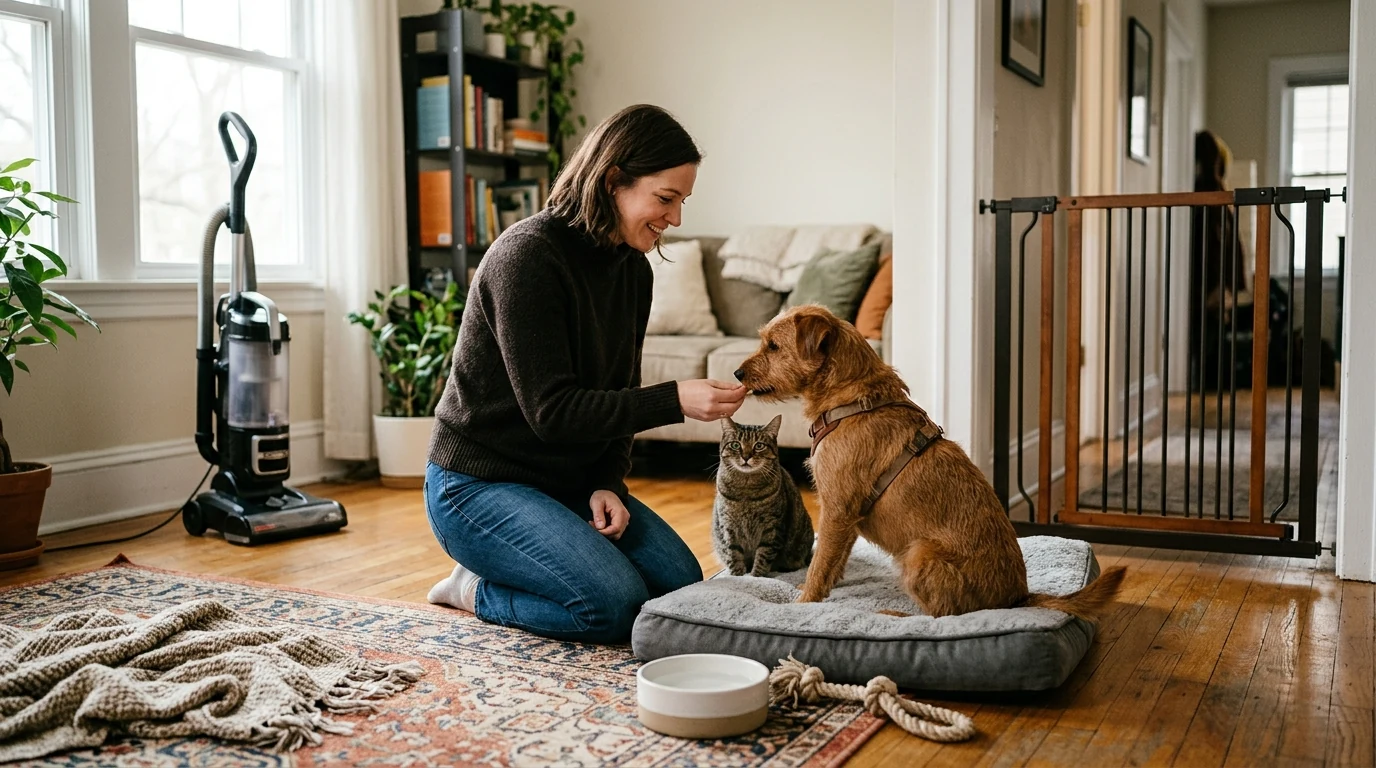
- Create a safe zone: Use a quiet room or covered crate with soft bedding, water, and background noise (fan/white noise).
- Control access: Use gates or close doors so the vacuum never corners your pet.
- Choose timing: Vacuum after exercise and potty breaks, not during peak excitement.
- Reduce intensity: Start with the lowest power setting; avoid whistling attachments; keep sessions short.
- Add calming supports (only if your pet will eat): Lick mats, stuffed food toys, or scatter feeding in a separate room.
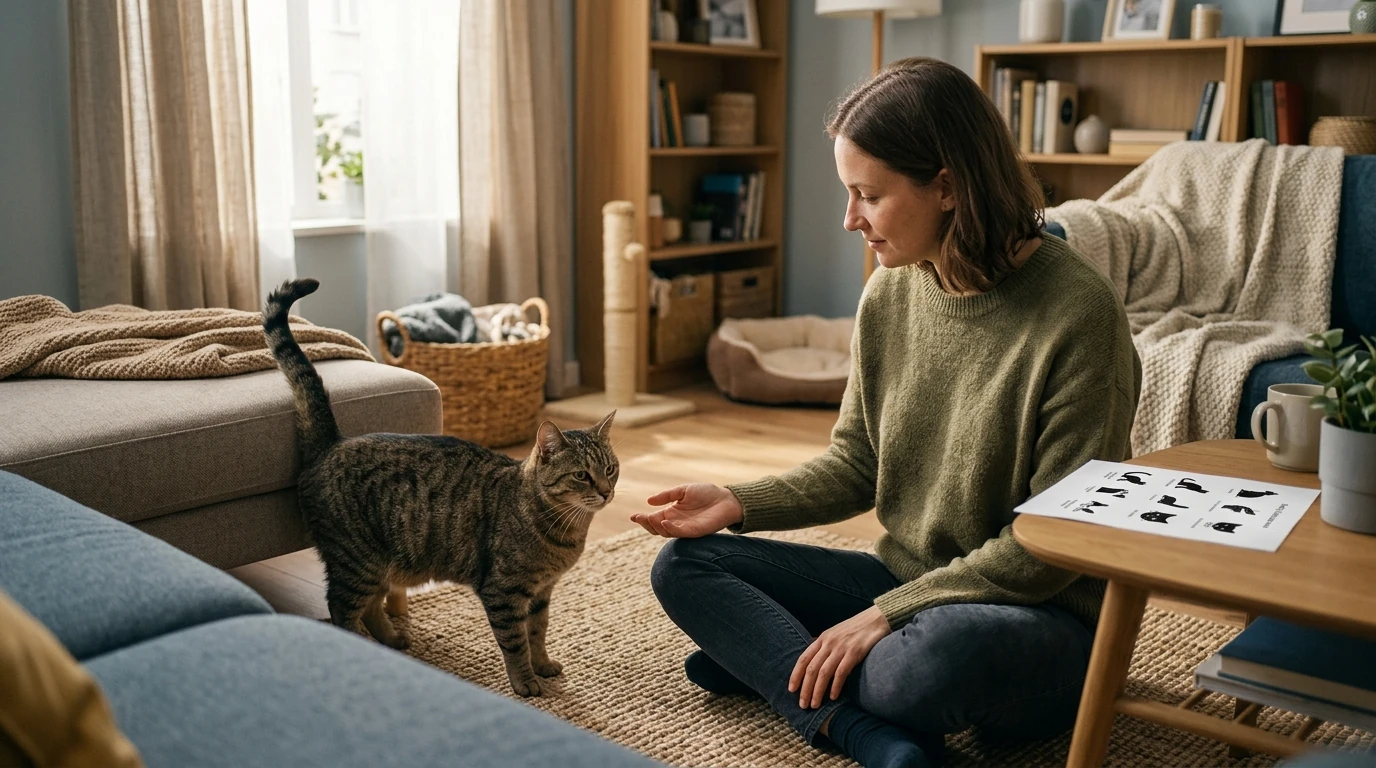
If you have a cat, subtle “I’m not okay” signals can show up early (tight body, low posture, fast grooming, or freezing). A quick reference like the Cat Body Language & Behavior Cheat Sheet can help you spot stress sooner, before it becomes a full panic response.
A gradual plan to desensitize and build positive associations
Step-by-step progression
Sample 7-day progression (adjust pace to the pet)
| Day | Vacuum exposure | Goal | If stress appears |
|---|---|---|---|
| 1 | Vacuum visible (off), 5–10 minutes total in short bursts | Pet can look and relax; takes treats | Increase distance; shorten session |
| 2 | Vacuum moved slightly (off), 5 minutes | Calm body language during movement | Move less; reward more frequently |
| 3 | Vacuum on 1–2 seconds in another room (2–5 reps) | Startle is minimal; quickly recovers | Increase distance; reduce seconds |
| 4 | Vacuum on 3–5 seconds at distance (3–6 reps) | Pet remains engaged with treats/toy | Go back to 1–2 seconds |
| 5 | Vacuum on while pet is behind barrier with food toy (30–60 seconds) | Pet can eat/lick steadily | Shorten time; move vacuum farther away |
| 6 | Vacuum a small area (1–2 minutes) with breaks | Pet stays calm or chooses safe zone | Return to barrier-only sessions |
| 7 | Gradually expand rooms; keep escape routes open | Normal household vacuuming is tolerated | Scale back to the easiest successful step |
For a printable structure that makes it easier to track distance, duration, and reward timing, see Helping Pets Handle Vacuum Stress.
Training cues that help during real vacuuming
Common mistakes that slow progress
When extra help is needed
If your pet shows severe panic, aggression, or self-injury risk, involve professionals early. Medical factors (pain, sensory decline, thyroid issues) can increase reactivity and should be ruled out by a veterinarian. The ASPCA overview of fear and anxiety and the AVMA dog behavior resources are solid starting points for understanding anxiety and safe next steps.
Tools and guides that support a calmer routine
- Track your plan: A step-by-step resource makes it easier to record your pet’s threshold and progress without guessing. Consider Helping Pets Handle Vacuum Stress for a structured approach.
- Read the room (especially for cats): The Cat Body Language & Behavior Cheat Sheet can help you notice early tension and pause before you push too far.
- Keep the safe zone rewarding: Rotate lickable treats, chew items, and foraging games so vacuum time predicts something good—at a distance your pet can handle.
FAQ
Should the vacuum be left out so pets get used to it?
Yes, if your pet can choose their distance and remain relaxed. Reward calm investigation, and if your pet avoids the area or shows stress, increase distance or put the vacuum away and reintroduce it more gradually.
What if my dog barks and lunges at the vacuum?
Prioritize safety with barriers and stop close-range vacuuming right away. Restart training with the vacuum off at a distance while rewarding calm behavior, and if there’s bite risk or escalation, involve a qualified trainer/behaviorist and your veterinarian.
Is it better to vacuum while my cat is eating?
Only if your cat continues eating comfortably with relaxed body language. If appetite drops or your cat tightens up or flees, switch to a quiet safe room and lower the vacuum intensity and proximity.









Leave a comment