Cat Body Language Cheat Sheet: Read Tails, Ears & Meows
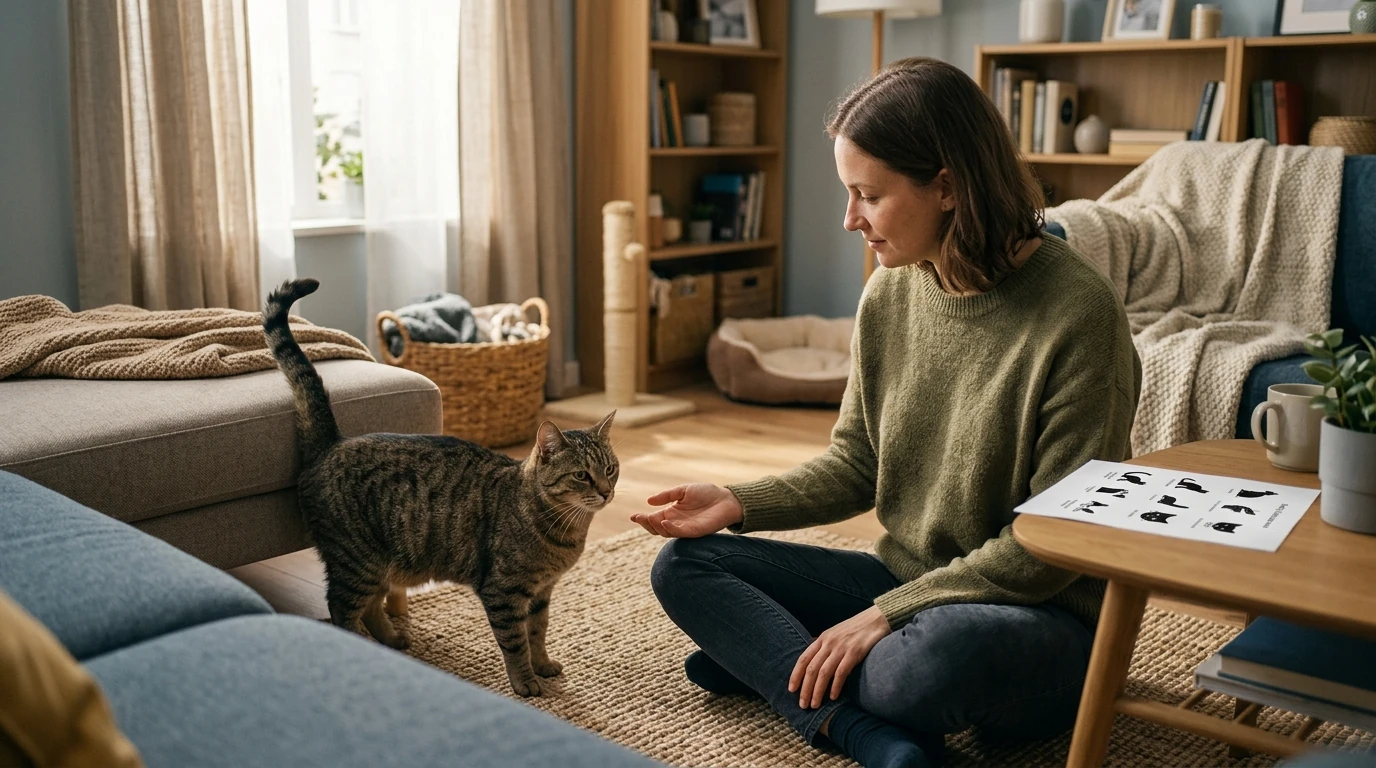
Cat Body Language & Behavior Cheat Sheet: A Printable Guide to Feline Signals, Postures, and Meows
Cats communicate constantly through posture, tail and ear position, facial cues, vocalizations, and daily habits. A quick-reference cheat sheet helps spot comfort vs. stress, prevent bites and scratches, and respond in a way that builds trust—especially for new cat parents, multi-cat homes, and anyone working on handling, grooming, or introductions.
How Cats Communicate: The Big Picture
Most cats try to “talk” with subtle signals long before they escalate to swats, hissing, or biting. A tiny ear turn, a brief freeze, or a twitching tail can be an early request for space—often missed because it’s quiet.
Context shapes meaning. A wide-eyed cat in a new room may be curious; that same wide-eyed look during nail trims may signal fear. Recent changes (moving, visitors, schedule shifts), health issues, social dynamics with other pets, and past experiences can all change how a cue shows up.
Look for “signal stacking”: multiple small signs together are more reliable than any single cue. For example, ears sideways plus tense shoulders plus tail thumping is a clearer “pause” than any one of those alone.
Also, not every cat is expressive in the same way. Kittens may be bouncy and chaotic; seniors may be quieter; anxious cats can “shut down” and look still rather than dramatic—so a calm-looking body isn’t always a comfortable one.
Tail, Ears, Eyes, and Whiskers: Quick Read of Mood
Tail
An upright tail often signals friendly approachability, and an upright tail with a little hook can be a warm greeting. A low or tucked tail typically points to fear, while a puffed tail signals high arousal (fear or excitement). Tail thumping or sharp flicks often mean agitation is building.
Ears
Ears forward usually show interest. Sideways “airplane ears” often mean uncertainty or overstimulation. Pinned-back ears are a defensive warning, and constantly swiveling ears suggest the cat is alert and scanning for what happens next.
Eyes
A soft squint or slow blink is one of the clearest relaxation signals. Wide eyes can mean arousal or fear. A direct stare can be a challenge (especially between cats). Dilated pupils can indicate excitement, fear, or pain—use the full situation to interpret it.
Whiskers
Whiskers angled forward often appear during curiosity or hunting focus. Neutral whiskers are common when calm. Whiskers pulled back/flattened often show stress, and asymmetry can signal uncertainty.
Simple rule: the more “compressed” the cat looks (ears back, body low, whiskers pulled back), the more space they need.
Body Postures and What They Usually Mean
Relaxed: loose limbs, side-lying, belly partially exposed, normal breathing, and a gently moving tail. This is a good time for calm companionship and short, consent-based petting.
Confident: upright stance, tail up, head level or slightly raised, and purposeful movement. Confident cats tend to approach, explore, and set the pace.
Cheat Sheet Table: Common Signals and What to Do Next
| Signal | Common meaning | Best response |
|---|---|---|
| Slow blink, relaxed whiskers | Comfort and trust | Slow blink back, speak softly, allow approach |
| Tail up with soft curve | Friendly greeting | Offer a hand to sniff; pet briefly if invited |
| Ears sideways, pupils large, body tense | Uncertainty or rising stress | Reduce stimulation, increase distance, give escape route |
| Tail lashing, skin twitching during petting | Overstimulation building | Stop petting, let the cat reset; shorten sessions next time |
| Crouched low, tail tucked, freezing | Fear; preparing to flee | Do not reach; create safety, move slowly, avoid cornering |
| Hiss/growl with pinned ears | Clear boundary and defensive warning | Back off immediately; remove trigger if possible |
| Head-bunting, cheek rubbing | Affiliation and scent marking | Accept contact; reinforce with calm voice and predictable routine |
| Meow repeated at door or bowl | Requesting access/food/attention | Confirm needs; reinforce desired behavior with structure |
| Purring with tense body or hiding | Self-soothing or discomfort (not always happiness) | Check context; consider pain signs and consult a vet if new |
Meows, Trills, Chirps, and Growls: Understanding Cat Vocalizations
Everyday Behaviors That Are Easy to Misread
When to Give Space vs. When to Engage
Using a Printable Cheat Sheet at Home
Printable Cat Communication Guide: What’s Included and Who It’s For
If you want a fast, fridge-friendly reference, the Cat Body Language & Behavior Cheat Sheet (Printable) is built for everyday interpretation of signals, postures, and common meows—especially in high-stress moments like carrier time, grooming, or guest visits.
For new kitten guardians, pairing behavior awareness with nutrition basics can make early routines smoother; Feeding Your New Kitten Right (Kitten Nutrition eBook) helps support steady growth and more predictable mealtime behavior.
Noise stress is a common trigger for “compressed” body language and hiding—especially around cleaning. Helping Pets Handle Vacuum Stress can be useful when your cat’s ears pin, pupils blow out, or they bolt the moment the vacuum appears.
Trusted References for Cat Behavior
For deeper, vet-informed guidance on low-stress handling and feline well-being, visit the American Association of Feline Practitioners (AAFP) Cat Friendly resources and International Cat Care’s behavior advice.
FAQ
Why does a cat purr while hiding or acting tense?
Purring can be self-soothing, not just a sign of happiness. Check posture, appetite, litter box habits, and any sudden behavior changes, and contact a veterinarian if this is new or paired with signs of pain or illness.
How can play fighting be told apart from real aggression?
Play usually looks loose and bouncy with pauses, role switching, and minimal vocalization. Aggression tends to be stiff with hard staring, pinned ears, growling/hissing, chasing without breaks, and blocking escape; separate calmly and reintroduce more slowly if it escalates.
What does a tail flick or tail thump mean?
Tail flicks and thumps often signal rising arousal or irritation. Stop petting, reduce stimulation, and offer space—or redirect energy with a toy at a comfortable distance.












Leave a comment